Charging
Best RV Automatic Transfer Switches for Shore Power and a Generator
Researched from published standards and manufacturer specifications. Updated .
Quick answer
A transfer switch sits between an RV's AC panel and its two possible power sources, shore power and an onboard or portable generator, and makes sure only one of them is ever connected to the panel at a time. That mutual exclusivity is not a convenience feature, it is what prevents a running generator from back-feeding power into a shore power cord that happens to still be plugged into a pedestal, which can put dangerous voltage onto lines that a park worker or another camper might assume are dead.
All four switches here are rated at 50A and built for automatic operation, so voltage rating, transfer delay, and how well each one matches an existing power center are what actually separate them.
Why a transfer switch is not optional once you add a generator
Plugging a generator into an RV that is also connected to shore power, without a transfer switch between them, can push generator voltage backward through the shore power cord toward the pedestal. That is a real hazard to anyone working on that circuit at the park, and it can also damage the generator or the RV's own wiring if the two sources are not synchronized. A transfer switch removes the possibility entirely by physically allowing only one source to reach the panel at a time, switching automatically as soon as it detects the active source has changed.
Automatic transfer switches compared
Every unit here is rated at 50A, so voltage rating and any added transfer delay are the details worth checking against the specific coach and generator combination.
| Transfer switch | Amps | Voltage rating | Transfer delay | Notable feature |
|---|---|---|---|---|
| PowerMax PMTS-50 | 50A | 120/240V | Not published | Lowest cost of the group |
| WFCO T57 | 50A | Not published | Not published | Matches OEM WFCO power centers |
| Surge Guard 40100 | 50A | Not published | Yes | Delay lets a generator stabilize before pickup |
| Furrion 50A ATS | 50A | 125/250V | Not published | Vibration and climate-rated sensing |
Published standard Source: Manufacturer published specifications for each listed transfer switch.. A published transfer delay is worth prioritizing for rigs with compressor loads like rooftop air conditioners, since an unstable generator startup voltage is easier on equipment when the switch waits it out.
Automatic vs manual transfer, and why automatic wins in an RV
A manual transfer switch requires someone to physically move a lever or breaker to select shore power or generator power, with a break-before-make design that avoids ever connecting both at once, but only if the person operating it does not skip a step. An automatic transfer switch senses which source is live and switches on its own, with no operator action required and no window for human error. For an RV that gets plugged into unfamiliar pedestals and occasionally run on a generator by someone in a hurry, automatic operation is the safer default.
30A vs 50A transfer switches
Every switch in this roundup is rated at 50A, which matches a true 50A service using two separate 120V legs. A rig on a 30A service uses a different, lower-amperage transfer switch built for a single 120V leg, and the two are not interchangeable. Check the RV's actual shore power plug and the rating printed on its power center before buying a replacement switch, since a 50A switch installed on a 30A service, or the reverse, will not match the wiring it is meant to protect.
Where a transfer switch sits in the wiring
A transfer switch installs between the RV's main AC panel and the two possible incoming power sources, typically wired in ahead of the breaker panel so that whichever source is selected feeds the entire panel through the switch. On rigs with an onboard generator, this is often already done at the factory, with the transfer switch built into or mounted right next to the power center. Adding a portable generator to a rig that never had one usually means adding the transfer switch as a new component during that same upgrade, since a portable generator was never accounted for in the original wiring.
Transfer switches and inverter/chargers together
A rig running both a generator and an inverter/charger needs to think through how the two interact, since an inverter/charger's own built-in transfer switch handles shore power versus inverter power, but a separate transfer switch is still required to add a generator into the mix safely. In that configuration, the standalone transfer switch typically feeds its output into the inverter/charger's shore power input, so the inverter/charger sees either the shore power pedestal or the generator, never both, while its own internal switch continues handling the changeover to inverter power when neither AC source is present.
Diagnosing a transfer switch that will not switch
A transfer switch that fails to move to generator power when the generator is running, or fails to return to shore power once it is available again, is usually either a wiring fault at the switch's control connections or a genuinely failed internal relay rather than a problem with the generator or the pedestal itself. Checking that the generator is actually producing correct voltage at its outlet, using a simple multimeter, rules out the generator as the cause before assuming the switch itself has failed. Replacing a transfer switch is usually more straightforward than diagnosing an intermittent fault inside one, which is part of why the OEM replacement parts in this roundup, sized and wired the same as the failed original, are a common repair path.
Replacing a failed transfer switch under warranty vs out of pocket
A transfer switch that fails within its warranty period is usually replaced directly by the manufacturer once a fault is confirmed, though the diagnostic step of ruling out the generator and the wiring first, described above, is often required before a warranty claim is accepted. Outside the warranty window, replacing a transfer switch is a modest expense relative to the rest of an RV's electrical system, and choosing a like-for-like OEM part, such as the WFCO T57 for a coach already built around WFCO components, tends to minimize the labor involved compared with adapting a different brand's switch to the existing wiring.
Transfer switches on solar-only or lithium-only builds
A rig with no generator at all, running purely on solar and shore power, does not strictly need a transfer switch in the traditional sense, since there is only one AC input source to manage. The moment a generator is added to that same rig, even a small portable unit kept as backup for cloudy stretches, a transfer switch becomes necessary again, since shore power and the generator both become live AC sources that could otherwise be connected simultaneously. Anyone planning a lithium conversion that includes adding a generator for the first time should budget for a transfer switch alongside the battery and charging components, not treat it as an afterthought once the rest of the system is wired.
How we chose
These picks were researched from published manufacturer specification sheets covering amp rating, voltage rating, and transfer behavior, then cross-checked against verified owner reviews for reported switching reliability and fit against OEM power centers. None of these switches were tested in person for this page.
Never wire a generator directly into a shore power inlet without a transfer switch in between. Doing so risks back-feeding voltage onto a shore power cord that may still be connected to a pedestal, which is a genuine electrocution hazard to anyone else working on that circuit. If there is any doubt about how the switch should be wired into the panel, have a qualified electrician make the connection.
Automatic transfer switches compared
Compare these on voltage rating and transfer delay first, since all four share the same 50A current rating.

WFCO T57 50A Transfer Switch
$176.09The WFCO part many coaches are already wired around, which makes replacing a failed original switch closer to a like-for-like swap than a redesign of the power center.
Best for: Replacing a failed original WFCO switch.
Check price on Amazon
Surge Guard 40100 50A Automatic Transfer Switch
$181.49Includes a delay before transfer, which gives a generator a moment to stabilize its output before it picks up the RV's load, protecting compressors from an unstable startup voltage.
Best for: Protecting compressors during changeover.
Check price on Amazon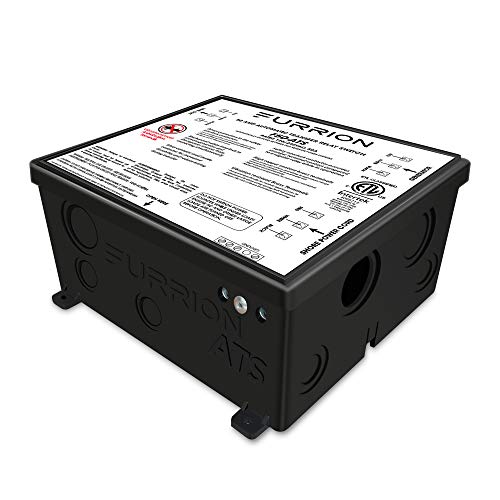
Furrion 50A Automatic Transfer Switch
$262.21Rated for a true 125/250V split-phase changeover with vibration and climate-rated sensing, which is more precision than most rigs running one shore power cord and one portable generator will ever use.
Best for: A 50A coach with a full split-phase panel.
Check price on AmazonFrequently asked questions
- What happens if I run shore power and a generator into my RV at the same time without a transfer switch?
- Without a transfer switch, both sources can end up connected to the same panel, which risks back-feeding generator voltage into the shore power cord and, through it, toward the campground pedestal. That is a real electrocution hazard to anyone working on that circuit and can also damage the generator or the RV's wiring. A transfer switch prevents this by design.
- Does my RV already have a transfer switch built in?
- Many factory-installed generators ship with a transfer switch already wired in, often a WFCO or similar OEM part, but not every rig has one, especially if a generator or an inverter/charger was added later. Check the power center for an existing transfer switch before assuming one needs to be added, since installing a duplicate where one already exists is a wasted purchase.
- Can I replace a 50A transfer switch with a 30A one?
- Only if the RV's entire electrical service is actually 30A. A 50A service uses two separate 120V legs, and a 30A switch is not built to handle that configuration safely. Match the transfer switch's amp and voltage rating to the RV's actual shore power service, not just to the generator being connected, since guessing based on the generator alone can leave half the panel unprotected.
- Why does my inverter/charger not need a separate transfer switch?
- Most inverter/charger units, including every one in this catalog's inverter/charger roundup, include a built-in automatic transfer switch as part of the same enclosure. It performs the same mutually-exclusive switching function between shore power and inverter output, so a standalone transfer switch would be redundant unless a generator is also part of the setup.
- What is the difference between a transfer switch and a surge protector?
- A surge protector, or an EMS unit, monitors pedestal power quality and disconnects on problems like low voltage, high voltage, or open ground. A transfer switch instead decides which of two power sources, shore power or a generator, gets connected to the panel. They solve different problems and many rigs use both together.
- How long does an automatic transfer switch take to switch sources?
- Most automatic transfer switches complete the switch within a few seconds of detecting a change in the active power source, though the exact timing depends on the model and whether it includes a deliberate transfer delay, like the Surge Guard 40100, built in to let a generator's output stabilize first.
Back-feed prevention is the entire point of this component. If a transfer switch install requires tapping into the RV's main AC panel and there is any uncertainty about the wiring, have a qualified RV electrician make the connection rather than guessing from a wiring diagram alone.