Reference
Battery State of Charge Chart: Resting Voltage to Percent
Researched from published standards and manufacturer specifications. Updated .
Quick answer
Resting voltage only means anything after a battery sits off charge and off load for several hours. On 12V lead-acid, 12.73V reads as 100 percent and 12.10V reads as 50 percent. On LiFePO4, the curve is nearly flat around 13.1V from roughly 20 to 90 percent state of charge, which makes voltage nearly useless across the middle of the range. A shunt-based monitor that tracks amp-hours in and out, not a voltmeter, is the accurate tool for reading LiFePO4 state of charge.
Resting voltage is a real and useful way to estimate state of charge on a lead-acid battery, but only under one condition that gets skipped constantly: the battery has to be off charge and off load for several hours before the reading means anything. Under load or mid-charge, the voltage reflects what is happening right now, not how full the battery actually is.
On LiFePO4 the picture changes further. The chemistry holds a voltage so flat across the middle of its usable range that a voltmeter cannot resolve state of charge there at all, which is exactly why a shunt monitor is treated as close to mandatory on a lithium bank.
What does resting voltage actually tell you?
Resting voltage is an open-circuit measurement, taken with no charging source connected and no load drawing current, that correlates with how full a battery is. The word resting matters: a battery reads its charging voltage while a charger is connected and its loaded voltage while something is drawing current, and neither of those numbers reflects true state of charge. Only after several hours off both charge and load does the voltage settle to a value the tables below can translate into a percentage. On LiFePO4 specifically, even a properly rested reading is close to useless from roughly 20 to 90 percent state of charge, because the curve is nearly flat across that entire span, sitting around 13.1V the whole way through.
Lead-acid resting voltage to state of charge
| State of charge | Resting voltage |
|---|---|
| 100% | 12.73V |
| 90% | 12.62V |
| 80% | 12.50V |
| 70% | 12.37V |
| 60% | 12.24V |
| 50% | 12.10V |
| 40% | 11.96V |
| 30% | 11.81V |
| 20% | 11.66V |
| 10% | 11.51V |
| 0% | 11.36V |
Convention Source: Widely used lead-acid open-circuit voltage table. Valid only after several hours off both charge and load. Individual chemistry (flooded, AGM, gel) and temperature shift the exact voltage slightly from these figures.
LiFePO4 resting voltage to state of charge
| State of charge | Resting voltage |
|---|---|
| 100% | 13.60V |
| 90% | 13.40V |
| 80% | 13.30V |
| 70% | 13.20V |
| 60% | 13.15V |
| 50% | 13.10V |
| 40% | 13.05V |
| 30% | 13.00V |
| 20% | 12.90V |
| 10% | 12.60V |
| 0% | 12.00V |
Convention Source: Approximate LiFePO4 open-circuit voltage curve; individual manufacturers vary slightly by cell chemistry. The curve is flat from roughly 20 to 90 percent, so voltage alone cannot reliably distinguish those states of charge from each other. Use this table only as an outside-range check, and use a shunt monitor for anything in the flat middle.
Minimum rest time before a resting voltage reading means anything
| Condition before reading | Recommended rest time |
|---|---|
| After driving with alternator charging | 3 to 4 hours minimum, off both load and charge |
| After shore power charging completes | 3 to 4 hours minimum |
| After solar charging on a sunny day | Until after sunset, once the controller drops to float or shuts off |
| Under any active load (fridge, inverter running) | Reading is invalid regardless of rest time |
| On charge, from any source | Reading reflects charging voltage, not state of charge |
Convention Source: Widely repeated battery testing practice; there is no single published standard rest duration, and voltage continues drifting for hours after current stops, especially on lead-acid.
What a voltage reading is still good for, even on LiFePO4
Resting voltage has not become worthless on a lithium bank, its usefulness has just narrowed to the two ends of the range. A reading at or above 13.6V after a proper rest confirms the battery reached a true full charge, and a reading approaching 12.0V is a clear warning the battery is nearing empty and the BMS may cut it off soon. What voltage cannot do is distinguish 40 percent from 70 percent, since both sit within a few hundredths of a volt of each other on the flat part of the curve. Treat a mid-range voltage reading on LiFePO4 as confirmation the battery is somewhere in a wide healthy middle, not as a specific percentage, and rely on a shunt for the actual number.
Why a shunt reads correctly where voltage cannot
A shunt monitor measures actual current flowing in and out of the battery and integrates it over time to track amp-hours directly, which does not depend on the battery being at rest or on where its voltage happens to sit on a flat curve. That is why a shunt gives a usable state of charge reading in real time, load or no load, charging or not, while a voltmeter can only ever offer an estimate, and a badly compromised one across the flat middle of a LiFePO4 discharge curve.
Say this plainly: on LiFePO4, resting voltage is nearly useless from about 20 to 90 percent state of charge. The curve sits flat around 13.1V across that entire span. A shunt monitor that tracks amp-hours, not a voltmeter, is the accurate tool for a lithium bank.
Monitor the number voltage cannot show you
A shunt monitor answers the question a voltmeter cannot on LiFePO4: how many amp-hours are actually left. Pair it with a charger capable of reaching a true full charge, since the resting voltage tables below only mean anything measured from a battery that has genuinely rested after reaching full or after a load stopped.

Victron SmartShunt 500A Battery Monitor
Price varies, check the listingThe direct amp-hour counting method this chart recommends over voltage alone for LiFePO4.
Best for: Any lithium bank you plan to boondock on.
Check price on Amazon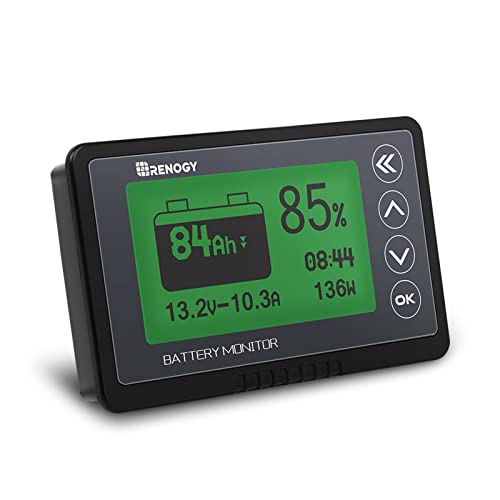
Renogy 500A Battery Monitor with Shunt
$63.10Same amp-hour counting approach at a lower price point for a smaller bank.
Best for: A panel-mounted readout.
Check price on Amazon
LiTime 500A Bluetooth Battery Monitor
$109.99App-based amp-hour tracking without a separate display to mount.
Best for: A build that may change system voltage later.
Check price on Amazon
Power Queen 12V 20A LiFePO4 Charger
$79.99Brings a battery to a true full charge before the several-hour rest period this chart’s voltage readings require.
Best for: Off-season top-ups.
Check price on Amazon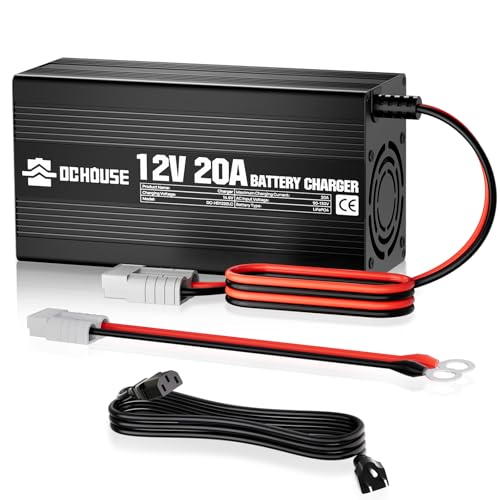
DC HOUSE 12V 20A Lithium Charger
$67.99A lower-cost way to reach full charge and maintain it before taking a resting voltage reading.
Best for: A battery stored off the rig over winter.
Check price on AmazonFrequently asked questions
- Why is LiFePO4 resting voltage useless for state of charge in the middle of the range?
- LiFePO4 chemistry holds a nearly flat voltage, around 13.1V, across roughly 20 to 90 percent state of charge, so two very different states of charge inside that range can read almost identical voltages. A shunt monitor that tracks amp-hours in and out gives an accurate reading regardless of where the battery sits on that flat curve, which is why it is treated as close to mandatory on a LiFePO4 bank.
- How long does a battery need to rest before a voltage reading is accurate?
- At least 3 to 4 hours off both charge and load is the widely used minimum, though voltage can keep drifting slightly for longer than that, especially on lead-acid. A reading taken right after driving, right after shore power charging finishes, or on a sunny afternoon with solar still charging will not reflect true resting state of charge.
- Can I read state of charge while the inverter or fridge is running?
- No. Voltage under an active load reflects the load's effect on the battery at that instant, not its true state of charge, and will typically read lower than the actual resting value. Either disconnect all loads and charging sources and wait several hours, or use a shunt monitor, which reads amp-hours correctly under load.
- Why do two 12V batteries read different voltages at the same state of charge?
- Chemistry, age, temperature and individual cell variation all shift the exact resting voltage slightly from the published tables. The lead-acid and LiFePO4 tables here are widely used planning conventions, not a guarantee for any specific battery; a battery a few tenths of a volt off the table at a known state of charge is normal, not a defect.
- What is a shunt monitor and why does it matter more for LiFePO4?
- A shunt monitor measures current flowing in and out of the battery and integrates it into a running amp-hour total, giving state of charge directly rather than inferring it from voltage. It matters more for LiFePO4 because that chemistry’s voltage curve is flat across most of its usable range, making voltage-based estimation far less reliable than it is on lead-acid.
- Does temperature affect resting voltage readings?
- Yes, both lead-acid and LiFePO4 resting voltage shift slightly with temperature, with colder batteries generally reading a bit lower at the same true state of charge. The tables on this page are room-temperature planning figures; a battery read in a cold compartment can appear a few percent lower than its actual state of charge suggests.
Rest it first, then read it, or skip the voltmeter entirely. A resting voltage reading taken under load or mid-charge is not a state of charge reading at all. On LiFePO4, even a properly rested reading only tells you something useful near full or near empty. For anything in between, a shunt monitor is the tool that actually answers the question.