Reviews
Redodo 12V 100Ah Self-Heating LiFePO4 Group 31 Review
Researched from published standards and manufacturer specifications. Updated .
Quick answer
The Redodo 12V 100Ah Self-Heating LiFePO4, Group 31 is built for owners who charge a lithium battery when the battery bay sits below freezing, since the internal heater warms the cells before accepting current, something a standard LiFePO4 BMS simply refuses to do. If you do not camp in freezing conditions, this is wasted money; a standard LiFePO4 pack in the same case size costs less and does everything else identically. Buy self-heating for the climate you actually camp in, not as a general upgrade.
Self-heating is the one LiFePO4 feature on the market that is not a convenience add-on. A standard lithium battery management system cuts off charging current below freezing because charging LiFePO4 cells in that state causes permanent internal damage, not a temporary performance dip. A self-heating pack like this Redodo solves that by drawing a small amount of power from whatever is charging the battery, warming the cells with an internal element, and only then allowing charge current in. That is a real capability difference, not a marketing label, and it is the entire reason this battery costs more than an otherwise identical standard pack.
This review is researched from Redodo's published specifications and from verified owner reviews on the listing, not from in-person testing of a purchased unit. The honest question to answer before buying is whether your battery bay actually drops below freezing while you are trying to charge, because if it does not, this battery's main feature does nothing for you.
Why does self-heating matter for a lithium battery?
A standard LiFePO4 battery management system will not allow charging current into the cells below freezing, full stop, because doing so plates metallic lithium onto the anode and permanently reduces capacity and safety margin. That protection is correct behavior, not a flaw, but it means a standard lithium battery in a cold battery bay simply will not recharge overnight even if the charge source is running. A self-heating pack solves this by wrapping the cells in a heating element that draws a modest amount of power from the charge source itself, warms the pack above freezing, and then allows normal charging to proceed. It is the only way to charge lithium reliably in a genuinely cold climate without a separate, purpose-built heating system.
Self-heating 100Ah batteries compared
All four batteries here are 100Ah, 12V packs with a self-heating element built into the case. None of the four listings independently verify the exact heating element wattage, so treat any specific draw figure as manufacturer-published rather than independently confirmed.
| Battery | BCI group | Bluetooth | Price |
|---|---|---|---|
| Redodo 100Ah Heated, Group 31 | 31 | No | $278.99 |
| Redodo 100Ah Heated | Not published | No | $269.99 |
| MARSENERGY 100Ah Heated | Not published | Yes | $249.99 |
| LiTime 100Ah Heated | Not published | No | $368.99 |
Published standard Source: Manufacturer spec sheets on the product listings, current at time of writing.. Only the Redodo Group 31 model publishes a BCI group size on its listing; the others are marked not published rather than assumed.
What a self-heating battery does not include
None of these four listings publish a visible indicator showing whether the heating element is actively running, so from the outside there is no way to confirm the heater has engaged beyond watching the charge current stay flat longer than expected on a cold morning. The battery also does not include a dedicated monitor for tracking the heater's own power draw separately from normal charging, which matters if you are trying to work out exactly how much of your solar or shore power budget the heater is consuming on a given day. Budget a separate shunt monitor if that level of visibility matters to your system, since none of these self-heating packs provide it on their own.
What owners report
Owners consistently report that the heating element noticeably delays how quickly the battery begins accepting a full charge current on cold mornings, which is expected behavior rather than a defect, since the cells have to warm before charging starts in earnest. Several owner reviews note that the heater draws visibly from the charge source, which shows up as a solar controller or converter reading active output for a period before the battery's own state of charge appears to climb. Owners running this off a modest solar array specifically flag that the heater load competes with normal charging on short winter days, which is worth budgeting for rather than discovering the first cold week out.
Who should not buy the Redodo self-heating battery
If you do not camp when the battery compartment can realistically drop below freezing, do not buy this battery. Say that plainly: a standard LiFePO4 pack in the same capacity class, such as the GRNOE or Vemdia Group 31 batteries, does everything else this Redodo does, at a noticeably lower price, without a heating element you will never use. Self-heating is worth the premium specifically for cold-season camping and nothing else, and buying it as a general-purpose upgrade is the single most common overspend in this category. Skip it as well if your solar array is small and already marginal in low sun conditions, since the heater load competes directly with battery charging on the shortest, coldest days.
Never attempt to charge a standard, non-heated LiFePO4 battery below freezing. Doing so causes permanent internal damage that shortens the battery's life and can create a safety hazard, which is exactly why the battery management system in a standard pack refuses the charge current in the first place. A self-heating battery like this one, not a workaround or a bypassed BMS, is the correct fix for a cold battery bay.
Alternatives to the Redodo Self-Heating 100Ah
MARSENERGY undercuts this Redodo on price while adding Bluetooth, which makes it worth a look if the Group 31 case size is not a hard requirement. If your camping never takes the battery bay below freezing, the GRNOE standard pack does everything else this battery does for roughly $120 less.

MARSENERGY 12V 100Ah Self-Heating LiFePO4 with Bluetooth
$249.99Combines self-heating with Bluetooth reporting at $249.99, roughly $29 less than this Redodo, letting you see whether the heater is active rather than wondering why a charge stalled.
Best for: Cold-weather use where you want visibility into the pack.
Check price on Amazon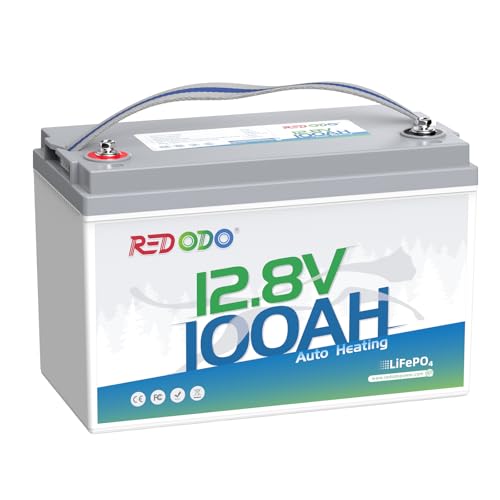
Redodo 12V 100Ah Self-Heating LiFePO4
$269.99The same self-heating battery from the same brand at $269.99, built to a different case footprint than the Group 31 reviewed here, worth checking if your tray does not measure to Group 31.
Best for: A first cold-weather lithium battery.
Check price on Amazon
LiTime 12V 100Ah RV Self-Heating LiFePO4
$368.99At $368.99, the most expensive option here, but LiTime publishes the heating element's activation threshold and draw, useful if you need to budget that load against a limited solar array precisely.
Best for: A documented build where the heating current has to be accounted for.
Check price on Amazon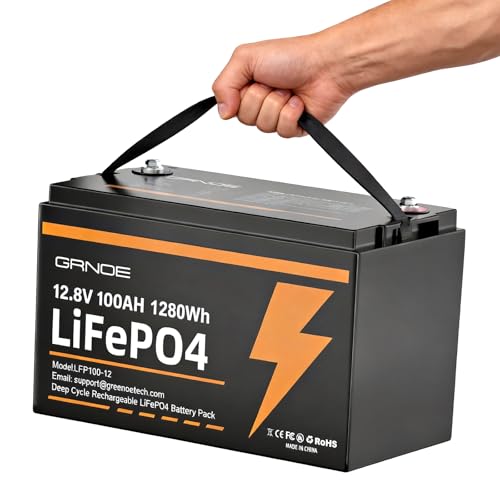
GRNOE 12V 100Ah LiFePO4, Group 31
$159.00A standard, non-heated Group 31 pack at $159 if you never see freezing in your battery bay. Paying for self-heating you do not need is the most common mistake in this category.
Best for: Budget-led single battery replacement.
Check price on AmazonFrequently asked questions
- Do I actually need a self-heating battery for RV camping?
- Only if your battery bay realistically drops below freezing while you are trying to charge it, which typically means camping in winter conditions or storing the RV somewhere unheated during cold months. If your camping stays in mild seasons and moderate climates, a standard LiFePO4 battery costs less and performs identically in every other respect, since self-heating only changes cold-weather charging behavior.
- How much power does the heating element use?
- Redodo does not publish an independently verified heating element wattage on this listing, so treat any specific figure as an estimate rather than a confirmed spec. Owners report the heater draws noticeably from the charge source during activation, which is worth accounting for if your charging comes primarily from a modest solar array on short winter days rather than shore power or a generator.
- Can this battery still discharge normally when it is cold?
- Yes. The low-temperature limitation on LiFePO4 chemistry applies specifically to charging, not discharging, so the battery can still power loads in cold weather without the heating element engaging. The heater only activates when the battery management system detects an attempt to charge below its safe threshold.
- Is the Group 31 case size correct for my RV?
- Group 31 is a standardized battery case dimension used across brands and chemistries, so measure your existing battery box against the published Group 31 dimensions before ordering. If your compartment is built for a different group size, the non-Group 31 Redodo variant or another brand's self-heating pack in your case size is the better fit rather than forcing this one in.
- What happens if I buy the standard battery instead and camp in the cold anyway?
- The battery management system will simply refuse to accept a charge below freezing, which means the battery stops recharging until the compartment warms above that threshold, even if your generator, shore power, or solar array is actively trying to charge it. This is not a defect; it is the BMS protecting the cells. If that scenario is a realistic part of your camping, a self-heating pack avoids it entirely.
- Does self-heating shorten the battery's overall lifespan?
- No, the opposite is generally true for cold-climate use. Attempting to charge a standard LiFePO4 pack below freezing, or forcing a charge through a bypassed BMS, causes the kind of permanent cell damage that shortens a battery's usable life. A properly functioning self-heating element avoids that damage entirely by warming the cells first, which protects the pack's long-term capacity in exactly the conditions where a standard battery would be at risk.
- Can I mix a self-heating battery with a standard LiFePO4 battery in the same bank?
- Manufacturers generally recommend against mixing different battery models, even within the same nominal voltage and capacity, because differences in internal resistance and charge behavior between models can cause uneven current sharing over time. If you are expanding an existing bank, matching the new battery to the same model already installed, self-heating or not, is the safer path than combining a self-heating pack with a standard one.
Buy this only if freezing battery bay temperatures are a real part of your camping. If they are, self-heating is not optional and this is a reasonable way to get it. If they are not, a standard LiFePO4 battery in the same case size does the same job for noticeably less money, and that is worth admitting before checking out.