Reviews
Super Empower 12V 100Ah LiFePO4 Group 24 Review
Researched from published standards and manufacturer specifications. Updated .
Quick answer
The Super Empower 12V 100Ah LiFePO4, Group 24 is the easiest first lithium swap for an RV that already carries a Group 24 lead-acid battery, since the case drops straight into the existing tray. Its BMS caps continuous draw at 100A, a fit for a single 1000W inverter, and it carries the low-temperature charge cutoff standard on non-heated LiFePO4 packs. Anyone who needs a 2000W inverter, a 200A BMS, or regular charging below freezing should look at a 200Ah pack or a self-heating pack instead.
The Super Empower 12V 100Ah LiFePO4 is a single house battery built into a Group 24 case, the same external footprint used by a large share of factory-installed lead-acid batteries in travel trailers and smaller motorhomes. That case size is the reason this battery is worth reviewing on its own rather than folding it into a generic 100Ah lithium list: a battery that needs a bigger box also needs a new tray, new hold-down hardware, and sometimes a rebuilt battery compartment. Group 24 does not ask for any of that. It is what makes a lithium conversion feel like a battery swap instead of a small construction project.
This review is built from Super Empower's published specifications and from verified owner reviews on the listing, not from in-person testing of a unit purchased for this site. The two checks worth doing before ordering are whether your current battery box actually measures out to Group 24, and whether your loads stay under the 100A continuous rating the built-in BMS carries. Both take five minutes with a tape measure and a calculator, and both save you a return shipment.
Does a Group 24 lithium battery really fit a Group 24 lead-acid tray?
Usually, yes. BCI group sizes are an industry standard for external battery dimensions, not a brand-specific measurement, so a Group 24 lithium battery is built to the same length, width, and height as a Group 24 lead-acid battery. What can still trip up an install is the hold-down hardware. A lithium pack in the same case weighs roughly a third of an equivalent lead-acid battery, and a hold-down bracket set up for the heavier battery can sometimes sit slightly loose against a lighter one. Check the fit and snug the hardware after the swap rather than assuming it carries over exactly.
What the 100A BMS actually limits
The built-in battery management system caps continuous discharge at 100A, and that number, not the 100Ah capacity rating, is what decides the largest inverter you can safely run. At 12V, 100A works out to roughly 1,200 watts before efficiency losses, which comfortably covers a 1000W inverter with headroom for cooler and pump loads running at the same time. It does not cover a 2000W inverter at anything near full output, since that class of inverter can pull close to 200A from a 12V bank under load, double what this battery's BMS is rated to pass. Run your actual appliance list through an inverter sizing calculator before assuming this battery covers whatever inverter you already own.
100Ah Group 24 and Group 31 batteries compared
All four of these batteries publish the same 100A continuous BMS rating and the same 1280Wh nominal energy figure. The differences worth paying for are case size and whether the pack reports its own state of charge.
| Battery | BCI group | BMS amps | Bluetooth | Price |
|---|---|---|---|---|
| Super Empower 100Ah | Group 24 | 100A | No | $182.99 |
| Dyness 100Ah | Not published | Not published | Yes | $199.98 |
| GRNOE 100Ah | Group 31 | 100A | No | $159.00 |
| Vemdia 100Ah | Group 31 | 100A | No | $153.99 |
Published standard Source: Manufacturer spec sheets on the product listings, current at time of writing.. Dyness does not publish a continuous BMS amperage figure on its listing, so it is marked not published rather than assumed.
What owners report
Owners consistently report that the Group 24 case is an accurate drop-in replacement for the lead-acid battery it typically replaces, with several noting the weight difference on lifting the pack into place. A recurring theme in owner feedback is that the low-temperature charge cutoff engages more often than expected during shoulder-season camping, not just in hard winter, because a battery bay against an exterior wall can dip below freezing overnight even when daytime temperatures are mild. Owners who camp in that range report simply waiting for the bay to warm before the battery accepts a charge again, which is the BMS doing its job rather than a defect. This battery does not include Bluetooth reporting, so state of charge has to be read off a voltmeter or a separate monitor rather than a phone app.
Who should not buy the Super Empower 100Ah
Skip this battery if you are running or planning to run a 2000W inverter, since the 100A BMS is built for roughly half that load. A single battery with a 200A BMS, such as the Yeagulch 200Ah, is the better starting point for that setup. Skip it as well if you camp regularly below freezing and want the battery to keep charging through the night, since a standard low-temperature cutoff means charging simply stops until the bay warms; a self-heating pack solves that problem instead. And skip it if your existing battery box measures out to Group 31 rather than Group 24, since a Group 31 pack such as the GRNOE or Vemdia will actually fit without shimming.
Do not try to work around the low-temperature charge cutoff yourself. The BMS stops charging below freezing because charging LiFePO4 cells in that state causes permanent internal damage, not because of an overly cautious setting. If you need to charge in a cold battery bay, the correct fix is a self-heating pack or a properly engineered heating pad on a thermostat, not disabling or bypassing the BMS protection.
Alternatives to the Super Empower 100Ah
All three alternatives here carry the same 100A continuous BMS rating, so none of them change what size inverter you can run. What changes is case size and whether the battery reports its own state of charge. Measure your battery box before choosing between a Group 24 and a Group 31 pack, since the case dimensions are not interchangeable.
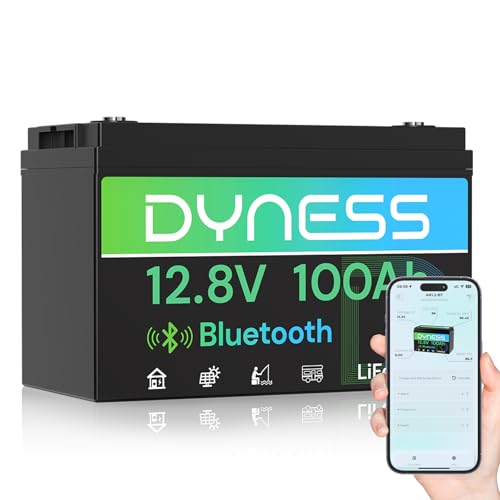
Dyness 12V 100Ah LiFePO4 with Bluetooth
$199.98The same 100Ah capacity class with built-in Bluetooth voltage and state of charge reporting, worth the roughly $17 premium if you do not plan to add a separate shunt monitor.
Best for: Owners who want pack data without wiring a shunt on day one.
Check price on Amazon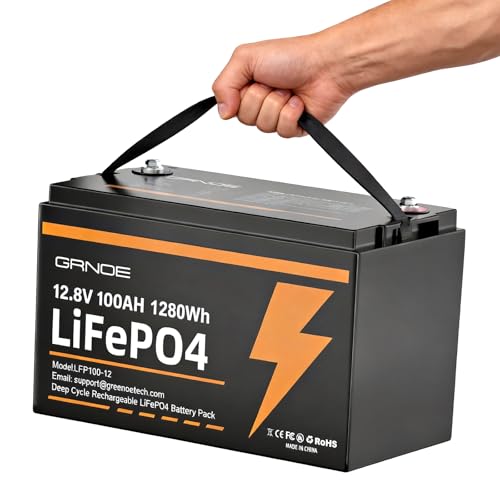
GRNOE 12V 100Ah LiFePO4, Group 31
$159.00A genuinely cheaper 100A BMS pack at $159, about $24 less than the Super Empower, but built to Group 31 dimensions rather than Group 24, so measure your box first.
Best for: Budget-led single battery replacement.
Check price on Amazon
Vemdia 12V 100Ah LiFePO4, Group 31
$153.99Another Group 31, 100A BMS pack priced close to the GRNOE, worth checking if that specific listing is out of stock or backordered.
Best for: Replacing a single Group 31 lead-acid battery.
Check price on AmazonFrequently asked questions
- Will a Group 24 lithium battery really fit my existing battery box?
- In most cases, yes. Group 24 is a standardized external dimension used across battery brands and chemistries, so a lithium battery sold as Group 24 matches the length, width, and height of a Group 24 lead-acid battery. Measure your existing box against the published dimensions on the listing before ordering, and expect to snug the hold-down hardware slightly since the lithium pack weighs much less than what it replaces.
- What size inverter can I run on this battery's 100A BMS?
- A 1000W inverter is the practical ceiling, since 100A continuous at 12V works out to roughly 1,200 watts before wiring and inverter efficiency losses are subtracted. A 2000W inverter can draw close to double the current this BMS is rated for at full output, which is why this battery is not the right base for a bank feeding a large inverter running an air conditioner or similar heavy load.
- Does this battery have Bluetooth or an app?
- No. The listing does not include Bluetooth reporting, so state of charge and voltage have to be read from a separate battery monitor or a basic voltmeter rather than a phone app. If app-based monitoring matters to you, the Dyness 100Ah in the same capacity class includes it for a modest price difference.
- Will this battery charge in freezing temperatures?
- No, not without help. Like nearly every standard LiFePO4 battery, its BMS includes a low-temperature charge cutoff that stops accepting current below freezing to prevent permanent cell damage. It will still discharge normally in the cold. If your battery bay regularly sits below freezing overnight and you need to charge through it, a self-heating pack is the appropriate upgrade rather than this battery.
- Can I run two of these in parallel for more capacity?
- Manufacturers generally support parallel connection of identical battery models, but confirm the specific parallel limit on the current listing before wiring two packs together, since that figure can change between production runs. If you already know you need more than 100Ah, a single 200Ah battery with a matching BMS rating is usually simpler to wire and mount than two 100Ah packs in parallel.
- How much lighter is this than the lead-acid battery it replaces?
- At roughly 21.6 pounds, this battery weighs about a third of what a comparable Group 24 lead-acid battery typically weighs, which is usually in the 40 to 50 pound range. Owners consistently mention noticing the weight difference when lifting the new battery into the tray, which also makes routine battery bay maintenance easier on a rig where the compartment is awkward to access.
- Do I need to change my converter after switching to this battery?
- In most cases, yes. A converter built for lead-acid charging uses a lower absorption voltage and will not bring a LiFePO4 pack to a genuine full charge, which leaves usable capacity on the table indefinitely even though the battery appears to be charging normally. Confirm your converter has a documented lithium charge profile, or plan to replace it as part of the same conversion rather than assuming any existing converter is compatible.
Buy this if your existing battery box measures out to Group 24 and your inverter stays under 1000W. Those two facts matter more than the price or the capacity rating, because a battery that does not fit the tray or cannot pass the current your inverter draws is not a good deal at any price.